
Pilatus PC7
Pilatus, 1966 · Military Aircraft
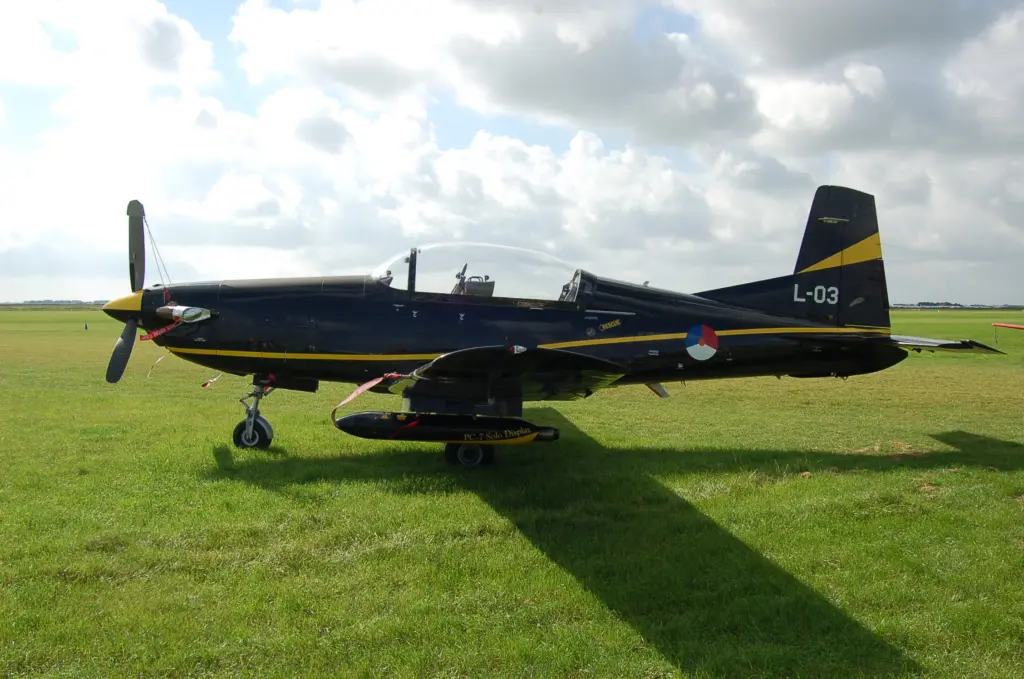
The Pilatus PC-7 Turbo Trainer is a low-wing tandem-seat training aircraft, designed and manufactured in Switzerland by Pilatus Aircraft. The aircraft is capable of all basic training functions, including aerobatics, instrument, tactical, and night flying.[1]
The PC-7 was developed from the preceding piston-powered Pilatus P-3,[1] largely differing by the adoption of a turboprop engine, a bubble canopy, and a new one-piece wing. Introduced during the 1970s, it has since developed a sizable presence of the global trainer market.[2] The type has been adopted by in excess of twenty air forces as their ab initio trainer, as well as multiple civilian operators. Over one million hours have reportedly been flown by PC-7s worldwide.[citation needed] In addition to training operations, some aircraft are armed and have been used for combat missions by several customers, including Chad, Iran, and Mexico, often in violation of the relevant export agreement between the customer and the Swiss government.
An improved model of the aircraft, the PC-7 Mk.II M, was developed during the 1990s, by combining the newer airframe and avionics from the PC-9 with the PC-7’s smaller turbine engine. Reportedly, in excess of 600[needs update] PC-7s have been sold to various operators, the majority of which are in service. In Pilatus’ range of aircraft, the PC-7 has been succeeded by the newer PC-9 and PC-21 trainers.
Source: Wikipedia
Log in to mark this as yours, flown, or on your wishlist.
Nobody has marked this aircraft yet. Be the first.